
Commercial · By sector
Manufacturing and industrial
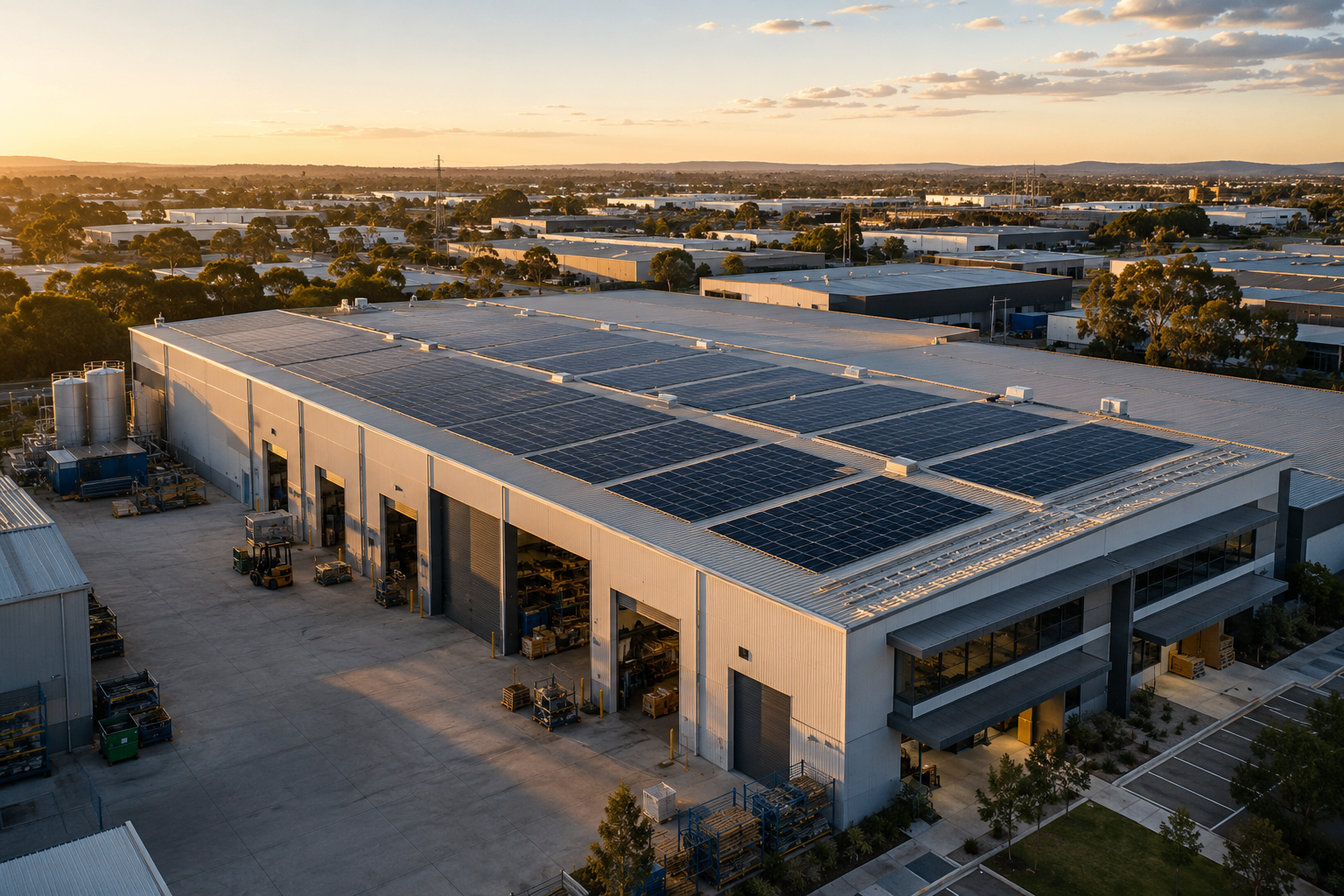
High daytime loads, production schedules, and demand charges make manufacturing one of the strongest fits for solar plus battery in Australia. We design around your shift patterns, not a template.
What we hear from this sector
Common challenges
- Network demand charges that punish short peaks during production startup
- Three-phase loads from compressors, pumps and CNC equipment
- Tight margins where every cent per kWh matters
- Production schedules that need clean, reliable power
How we approach it
Our approach
Interval data analysis
We pull 12 months of 30-minute data and overlay your production schedule before sizing anything.
Demand-charge modelling
Battery sizing is driven by your peak demand windows, not just kWh consumption.
Roof and structural review
Older industrial roofs need a structural and condition check before we commit to a layout.
Staged commissioning
We schedule cut-overs around your production calendar to avoid downtime.
What good looks like
Typical outcomes
- Significant reduction in daytime grid consumption, depending on load profile and operating hours
- Demand charges reduced through targeted battery dispatch
- Predictable energy cost over a 10-25 year horizon
Outcomes vary by site, tariff and load profile. We confirm what is realistic for you during the energy review.
What we typically install
Indicative kit and sizing
- Rooftop or ground-mount arrays from 100 kW upwards, tier-1 modules
- Three-phase string or central inverters with monitoring
- Commercial battery (100–500kWh) sized to demand windows
- CT metering and live load monitoring on the main switchboard
- Solar carports for staff parking where roof area is constrained
Typical SolKind project sizing for this sector. Final sizing is determined by your roof, load profile and budget during discovery.
Indicative payback
4–8 years typical, depending on tariff, load profile and battery sizing. Confirmed against your interval data, not assumed.