
Commercial · By sector
Medical centres and healthcare
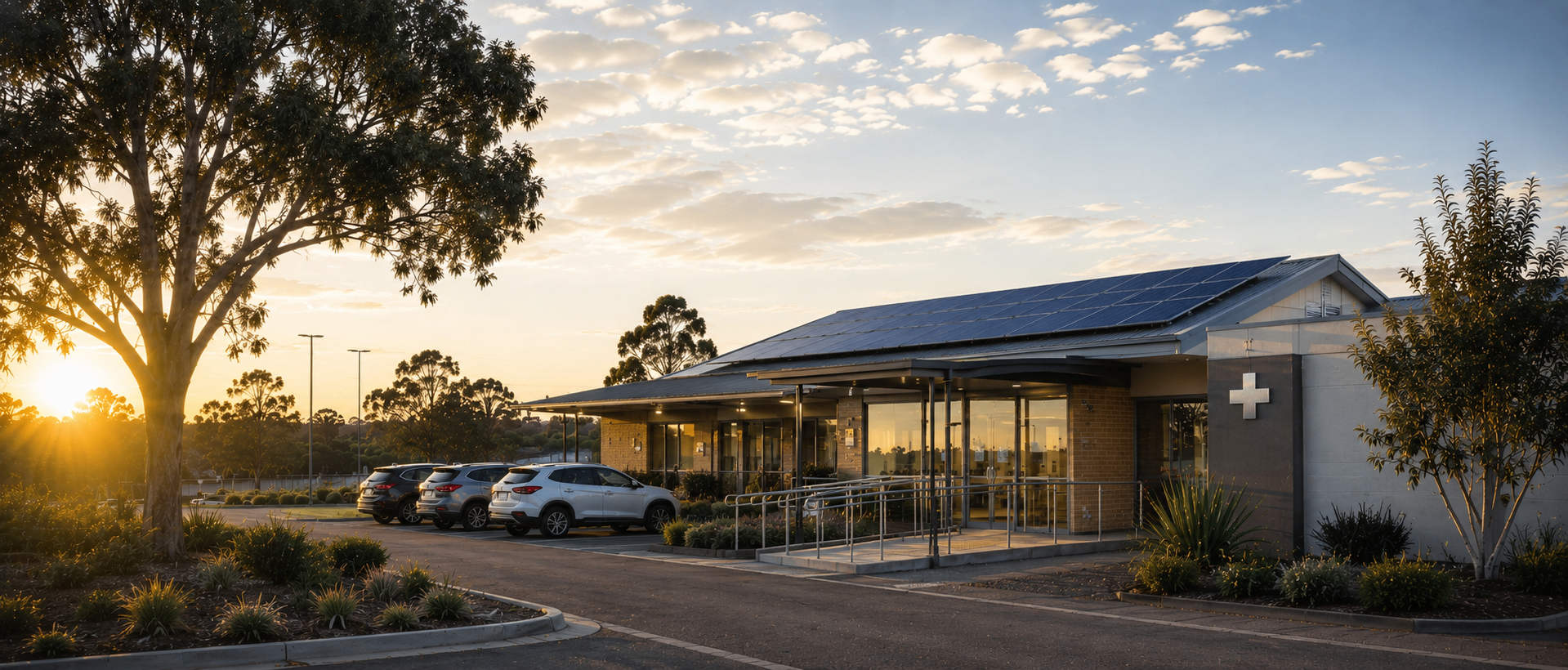
Continuous loads from chillers, imaging and HVAC, plus duty-of-care obligations, make resilience as important as savings. Battery and backup design get equal weight to the array itself.
What we hear from this sector
Common challenges
- 24/7 critical loads that cannot tolerate outages
- High HVAC demand for patient comfort and equipment cooling
- Compliance with clinical and electrical standards
- Sensitive equipment that needs clean power quality
How we approach it
Our approach
Critical load mapping
We separate life-safety, clinical and back-of-house circuits before designing battery backup.
Hybrid inverter selection
Equipment chosen for power quality and seamless transfer, not just price.
Coordinated install
Works planned around clinic hours, with no impact to patient services.
Documented commissioning
Full handover pack for your facility manager and compliance records.
What good looks like
Typical outcomes
- Lower operating cost on always-on loads
- Battery resilience for priority circuits during grid outages
- Clear sustainability evidence for accreditation bodies
Outcomes vary by site, tariff and load profile. We confirm what is realistic for you during the energy review.
What we typically install
Indicative kit and sizing
- 50–500kW rooftop arrays, low-PID modules for sensitive sites
- Hybrid inverters with seamless transfer for critical circuits
- Battery sized for clinical and life-safety load ride-through
- Hybrid inverters specified for clean power output to sensitive imaging and diagnostic equipment
Typical SolKind project sizing for this sector. Final sizing is determined by your roof, load profile and budget during discovery.
Indicative payback
4–8 years typical, depending on tariff, load profile and battery sizing; resilience value of battery is captured separately in the business case.