
Commercial · By sector
Shopping centres and retail
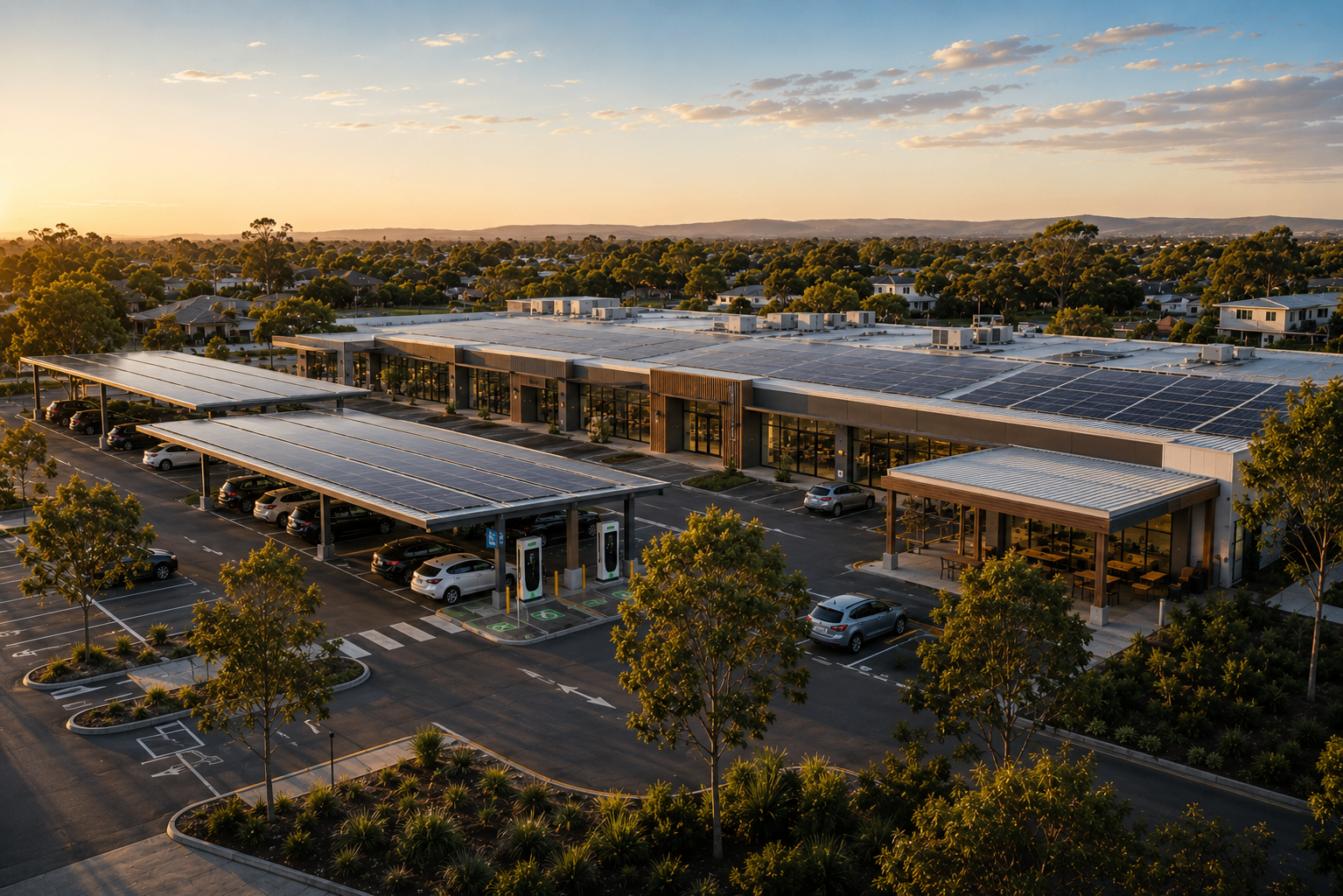
Large rooftops, high common-area loads and tenant sustainability requirements make retail an obvious fit. NABERS pressure and embedded networks add complexity we plan for from day one.
What we hear from this sector
Common challenges
- Common-area HVAC and lighting running long trading hours
- Embedded network billing and tenant on-sell arrangements
- NABERS Energy rating commitments to landlords or investors
- Roof access and trading-hours constraints during install
How we approach it
Our approach
Whole-of-site energy review
Common area, tenancy and base-building loads modelled separately.
NABERS-aligned design
Sized to move the rating needle, with documentation your assessor can use.
After-hours installation
Roof works scheduled outside trading hours where required.
Tenant communications
Signage and tenant communications can be included on request, so tenants understand the upgrade.
What good looks like
Typical outcomes
- Lower base-building energy cost passed through to outgoings
- Improved NABERS Energy rating for the asset
- Visible sustainability story for tenants and shoppers
Outcomes vary by site, tariff and load profile. We confirm what is realistic for you during the energy review.
What we typically install
Indicative kit and sizing
- 200kW–1.5MW arrays across centre rooftops, zoned by trading area
- Multiple inverters with tenant-billing-aware metering
- Optional battery for evening common-area peak
- Performance reviews on request, aligned to NABERS reporting cycles, using inverter and meter data
- Solar carports for customer parking, EV-ready where required
Typical SolKind project sizing for this sector. Final sizing is determined by your roof, load profile and budget during discovery.
Indicative payback
4–8 years typical, depending on tariff, load profile and battery sizing; longer where the centre is on an embedded network with on-sell complexity.